Intro
Starting an internship was inevitable for me as a university student. And as someone who has walked this path, I’d like to share what this experience has brought into my life.
First Week of Internship
Like everyone else, this was a process that excited me a lot in the beginning. I found myself in a completely new environment with a structure I wasn’t familiar with at all. In the middle of this unknown, I ended up at Akasya AI. After spending a month and a half with the team, the initial nervousness slowly turned into a rhythm I could adapt to step by step.
Before telling you how this adaptation happened, I need to briefly mention the office environment. If I had to describe it in one word, it would be balance. Even in a 10-square-meter office full of laughter and jokes, switching to a serious work discipline was incredibly effortless. I realized how such a small place can feel warm, fun, and at the same time highly professional.
This journey taught me that working life is not only about working, it’s about shared experiences and collaboration with the right people.
What Did I Learn?
Now, let’s get to the most important question: what did I really learn during this time?
On my very first day, our project advisor Ali Işıngör told me:
“As a visual communication designer, you need to know web programming.”
And that’s exactly where my adventure with Visual Studio Code began.
Let me walk you through what I picked up throughout this journey, step by step.
HTML: Getting Started with the Basics
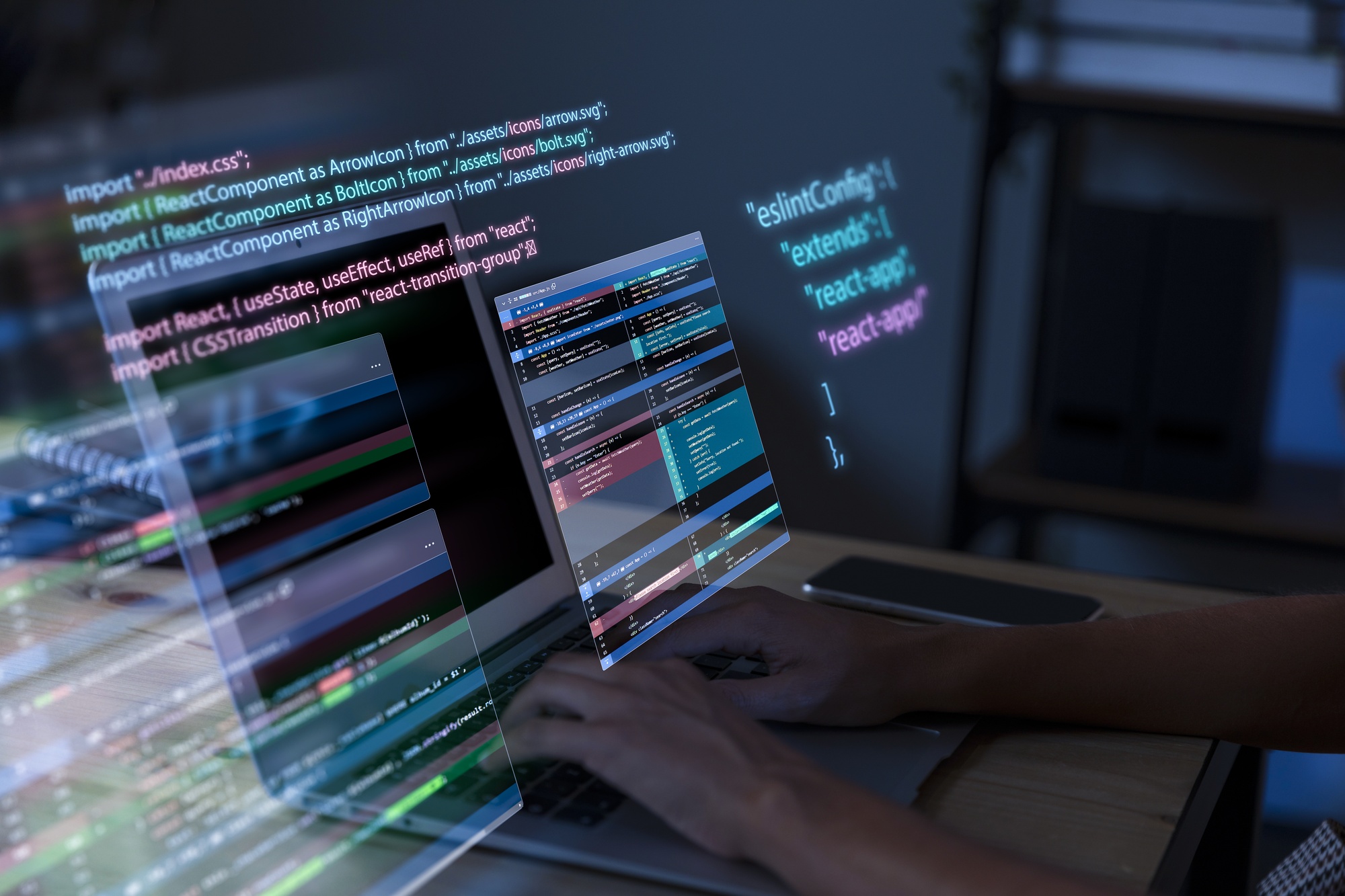
At first, staring at a screen full of lines of code — straight out of Mr. Robot — was intimidating. But I got into it quickly. I began with HTML tags. It felt like learning a brand-new language where the tags were my vocabulary.
As I improved, I started separating my titles and paragraphs using divs, recognizing which elements corresponded to what on a webpage. I learned how to work with images.
Then came the attributes. I could give elements identity with properties like id and class. I wasn’t only using the words anymore, I was learning to control them. Even though the vast sea of knowledge seemed endless, understanding its logic made learning incredibly fun.
CSS + Bootstrap: Discovering Visual Design
However, as anyone working with web programming knows, HTML alone is like a website stuck in the year 2005.
It needed style. That’s when CSS entered the scene. I learned what responsive design means, creating a website that flows smoothly across different devices. In my opinion, that’s one of the most essential parts of user experience. And of course, I can’t forget Bootstrap: a wide library of ready-to-use components that made styling so much easier.
JavaScript & the DOM: Bringing My Page to Life
Just when I was lost in colors, sizes, and layouts, JavaScript and the DOM made their entrance. Things were getting serious. I wasn’t just driving the car anymore; I was learning how the engine worked. It was now a team effort: me, my website, and its users.
With const, functions, event listeners, loops, and conditions, every click began to matter. Even hovering over an element could trigger a function I defined. I could access and manipulate any element I wanted through commands like querySelector and getElement.
It was confusing at first; sure, doubts crept in. But as I practiced, it all began to make sense. The grammar of this language wasn’t something to fear, just a bit more complicated.
I can confidently say, learning these turned into a milestone for me. Thanks to JS and the DOM, the page I built with HTML was no longer an empty document, it finally had purpose.
Of course, I ran into many problems along the way. No code works perfectly on the first try, that’s a universal rule. As my vocabulary grew, I tried different solutions: “Is that not how you select an element? Okay, let me try this instead.” As I became more fluent in browser logic, errors stopped scaring me. For example, a TypeError wasn’t a terrifying red warning anymore, it became a clue. And console.log… was my most loyal friend.
This whole process taught me that what I’m doing isn’t just typing on a keyboard. I am actually thinking, creating, and solving problems.
Conclusion
This world is so vast yet so structured that I’m sure there are countless things I’ve forgotten for now, waiting to resurface when I need them again. It has been a truly special journey for me. Honestly, it still is. I’m just at the beginning, and there’s so much more to learn. But with the support of the Akasya AI team and the joy I get from this work, I’m no longer looking at the future with anxiety, but with excitement and hope.